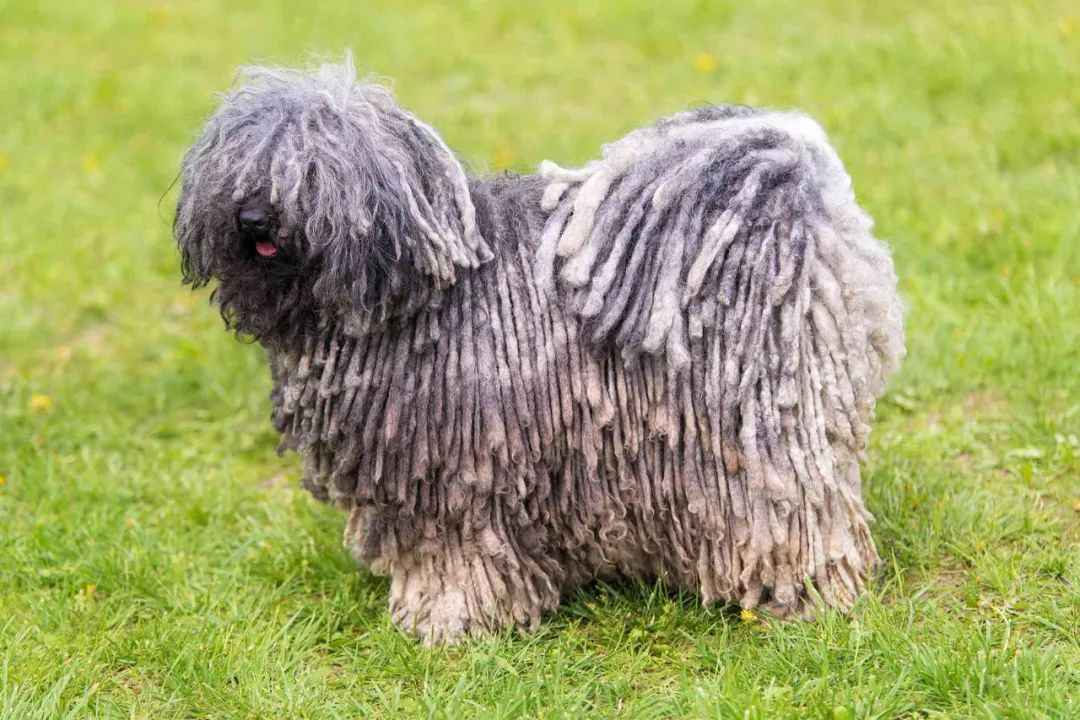
The Puli’s journey began with the Magyar nomads, who brought the breed to Hungary around 900 AD. Bred to guard sheep in harsh climates, its dense double coat—resistant to extreme cold and rugged terrain—earned it a sacred place in herders’ lives26. In the 17th century, crossbreeding with French and German herders’ dogs nearly diluted the Puli’s lineage. However, Dr. Emil Rácz initiated a conservation program in 1912, establishing the first breed standard in 1915, which was later recognized by the FCI in 19247.
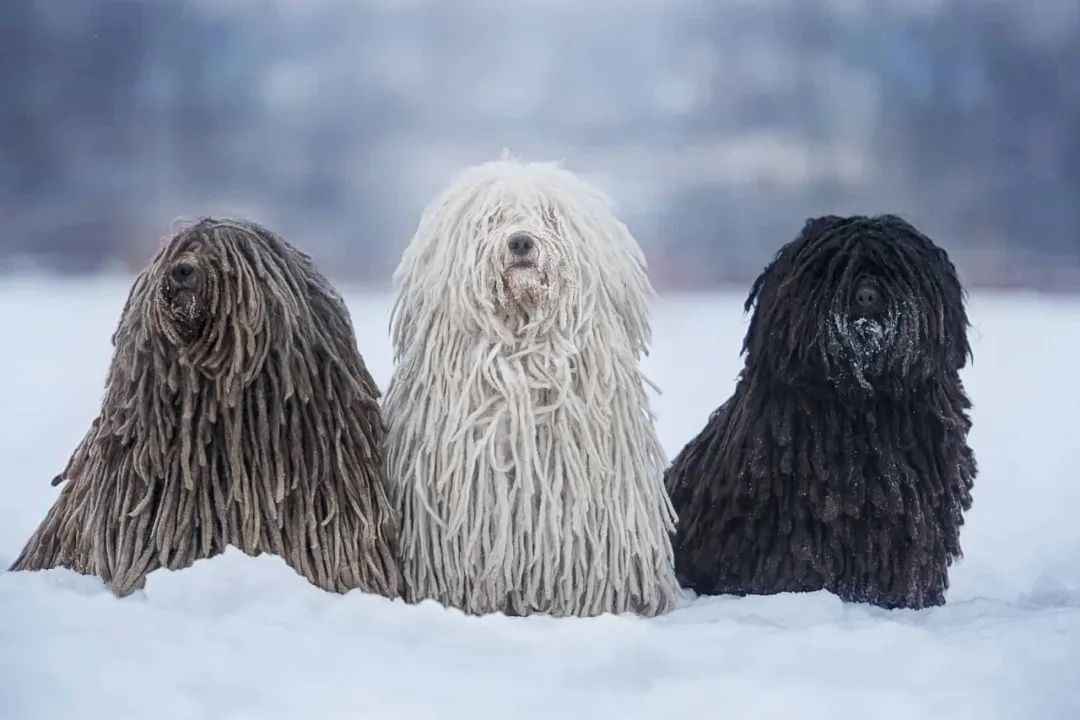
Compact and agile (37–48 cm tall, 10–18 kg), the Puli’s most striking feature is its corded coat. Composed of wavy outer hair and a woolly undercoat, the fur naturally clumps into rope-like strands that lengthen with age, cascading to the ground. Coat colors include solid black, gray, and white, with slate-gray skin27. Hypoallergenic and odor-resistant, this unique coat requires minimal shedding but demands regular grooming to prevent matting310.
Source: Images from the Internet, if there is any infringement, please contact the removal of
Intelligent and spirited, Pulis exhibit strong herding instincts, often "corralling" family members by nipping at heels—a trait balanced by their affectionate and humorous nature. Their alertness and reservedness toward strangers make them exceptional watchdogs, while their loyalty ensures they thrive as devoted companions2410.
Post-WWII, the Puli transitioned from working dog to beloved pet. Introduced to the U.S. in 1935, it excels in agility and obedience trials, showcasing its athleticism and trainability310. While still capable of herding, Pulis now adapt seamlessly to city life, provided they receive daily exercise (60+ minutes) and mental stimulation. Their energy levels suit active families, though owners must invest in grooming routines to maintain coat health48.
From Hungarian shepherds’ trusted allies to celebrity companions, the Puli embodies resilience and versatility. As Zuckerberg noted, "Beast isn’t just a pet—he’s family." With its rich heritage and timeless appeal, the Puli continues to captivate hearts worldwide, proving that some legends only grow more remarkable with age.